Talk: Open Science in the age of AI? Perspectives from the Jupyter ecosystem!
Dr. Fernando Pérez delivered this talk as an invited speaker for the Colorado School of Mines Department of Geophysics Heiland Lecture Series and Climate Seminar Series on April 29, 2026.
Matt Fisher 
Fernando Pérez
In April 2026, Fernando Pérez delivered a talk at the Colorado School of Mines Heiland Lecture Series that told the story of the history of Project Jupyter and the open science movement, overviewed the power of the Jupyter architecture, and live-demoed four example workflows that integrate free (“open-weights”) Large Language Models (LLMs) to lower barriers to insights.
Core to this talk is the idea that many of the tools and practices we depend on today evolved from a community-wide refusal, 25 years ago, to accept a future where computing was dominated by proprietary products and services. That’s why you’re probably writing Python instead of MATLAB today. We may be in a similar moment today: so why are many of us begging our tech overlords for API credits?
Instead, let’s co-create a future in which our work is supported by models that we fully control, our data doesn’t need to leave our home or office, and we aren’t paying rent to do our job.
You can watch Fernando’s talk on YouTube below, and read on to learn about how we built the demos together.
Follow-up op-ed in Nature!
Soon after this presentation, Cassie Buhler, Fernando Pérez, and Carl Boettiger published the op-ed Why scientists should lead the shift away from AI mega data centres in Nature.
Dream team!
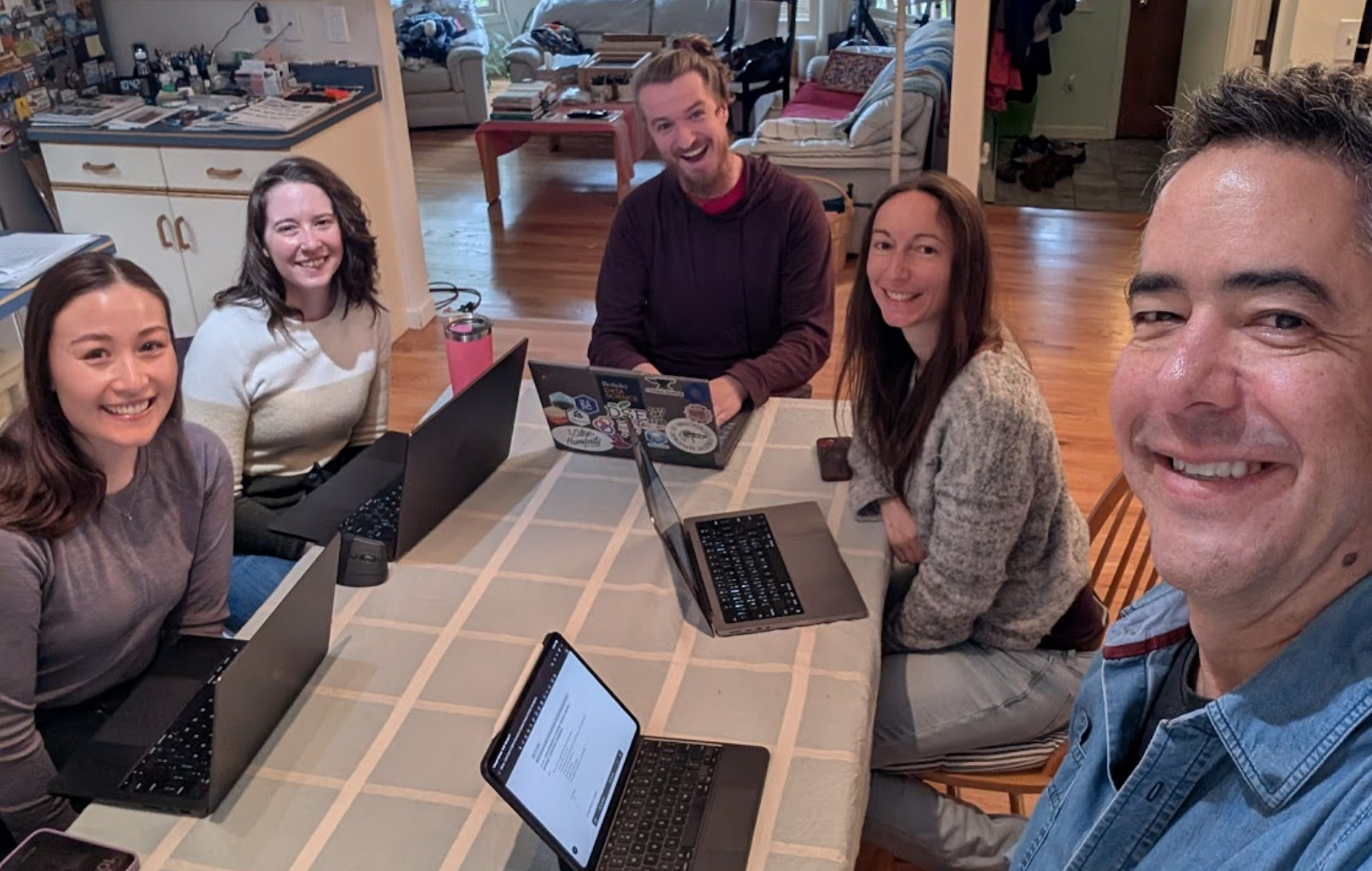
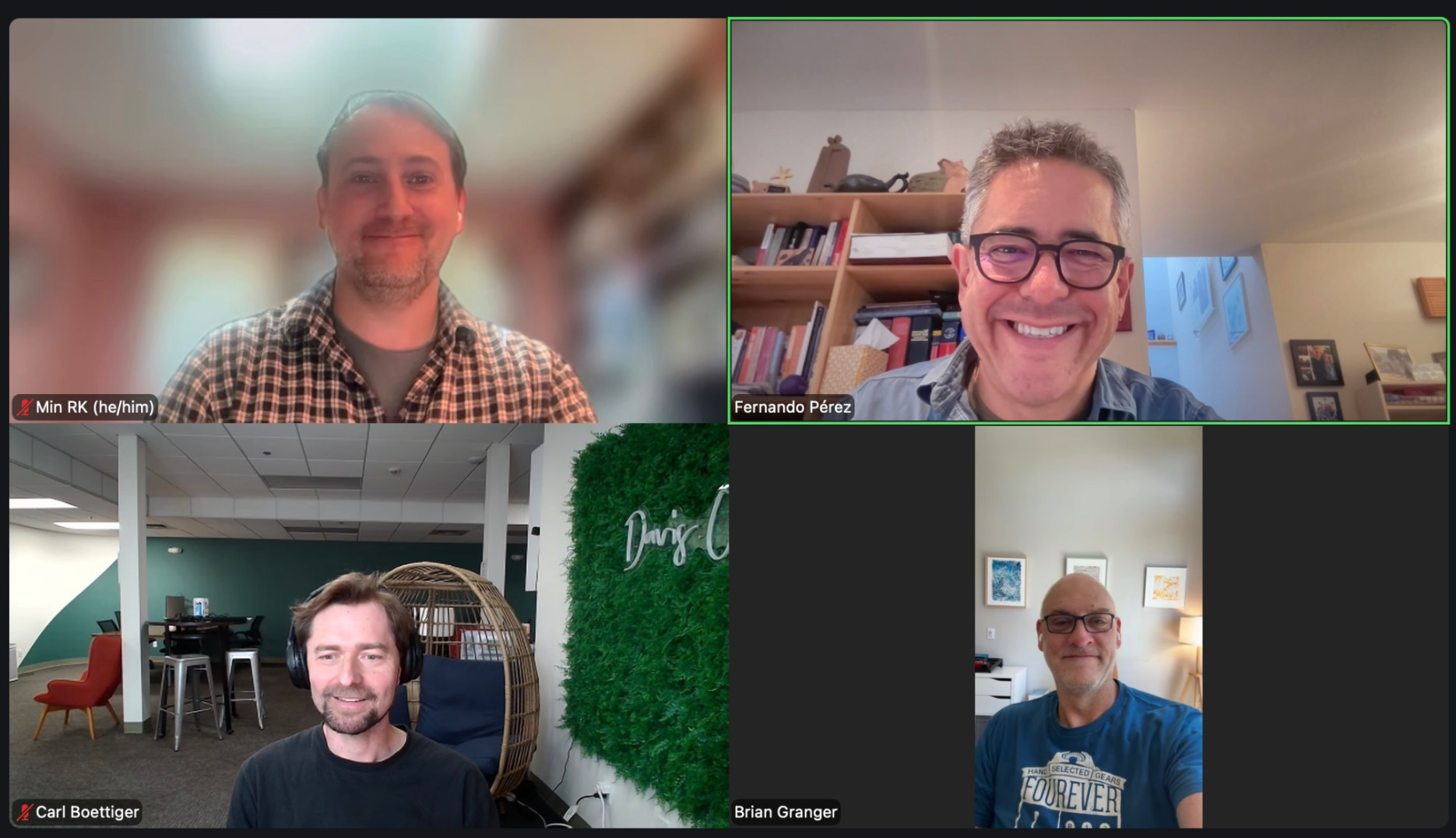
Designing for these demos involved a group gathering, both virtual and in-person in Boulder, Colorado, to co-work on software design & development, infrastructure prep, local model evaluation, and pushing the limits of the new v3 release of Jupyter AI.
Over the course of our collaboration, the number of demos continuously increased until we arrived at four demos.
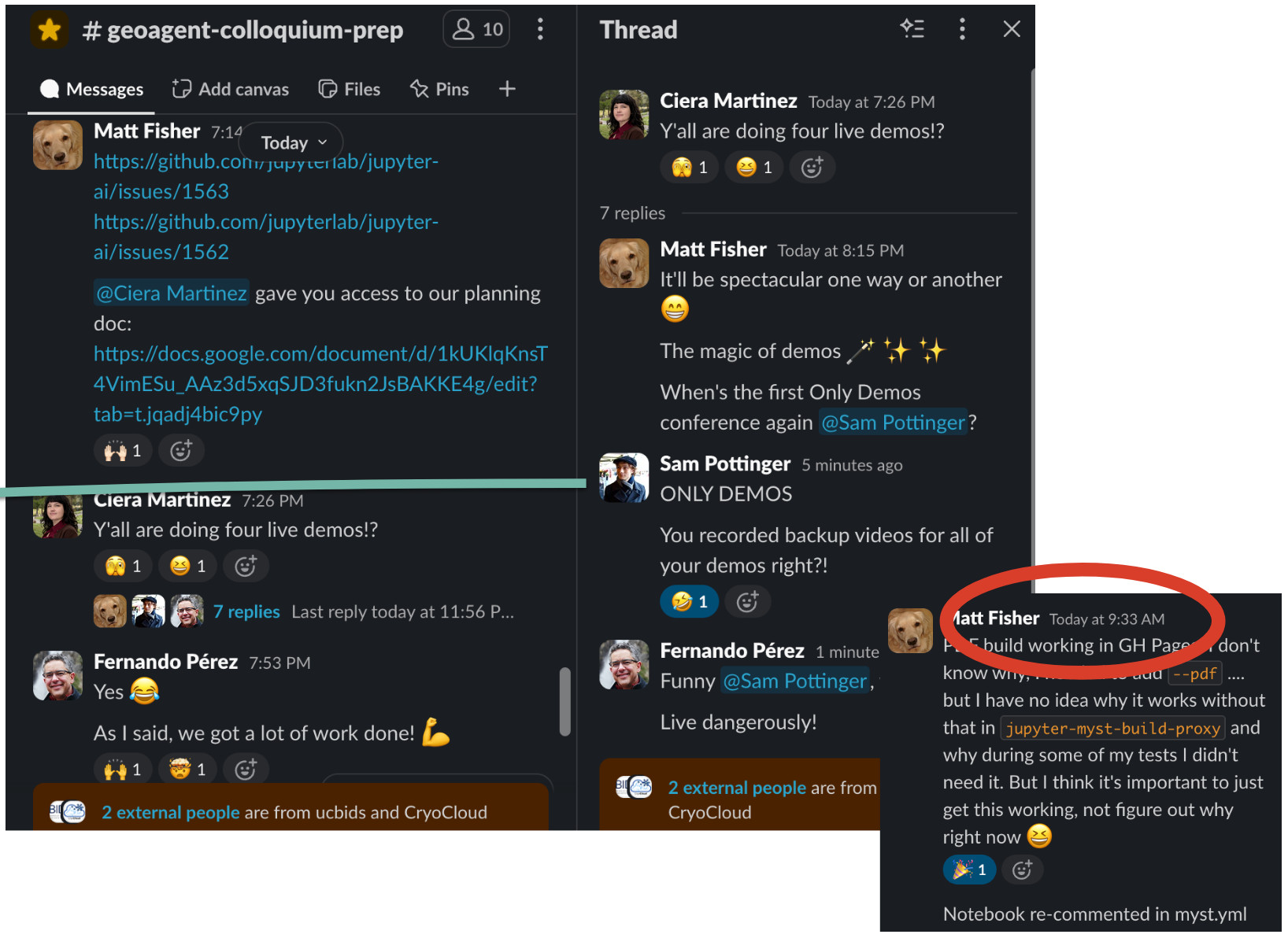
- Local (“open-weights”) AI: Using LLMs running on Fernando’s desktop Mac Mini to author Jupyter Notebooks.
- A “GeoAgent” (now known as “Geospatial LLM-Enabled Navigator (GLEN)” – more to come on this!) high seas webapp: An AI-enabled map workflow for answering questions about data on federally funded infrastructure using open models.
- GeoAgent workflow in JupyterLab in the cloud: a more general-purpose cloud-based (using CryoCloud) workflow for experts that can be customized using open models.
- Publishing from CryoCloud to GitHub: Publish outputs created in Demo 3 using free and open publishing methods (MyST Markdown + GitHub Pages).